
Living in a compact apartment often feels like a constant negotiation between the things you love and the square footage you actually have. When closets are shallow, countertops are scarce, and floor plans are tight, clutter accumulates quickly. Finding practical small apartment storage ideas is not about purging every possession; it is about building clever spatial systems that work with your room’s natural architecture rather than fighting against it.
By rethinking dead zones, investing in strategic multi-functional furniture, and making full use of your vertical real estate, you can create a calming, uncluttered home that feels twice its actual footprint. In this comprehensive guide, we explore battle-tested storage systems designed specifically for modern urban apartments, rentals, and studio layouts.
The Foundation of Small Space Living: Audit Before You Store
Before purchasing acrylic containers, shelving brackets, or canvas baskets, conduct a ruthless spatial audit. The greatest mistake in studio apartment organization is attempting to organize items that should simply be donated, recycled, or sold.
Take stock of every room by zone. Group similar items into broad categories: daily essentials, weekly utility, and seasonal archives. If an item has not been touched in nine months and carries no deep sentimental value, clear it out. For deeper inspiration on setting up calming minimalist rooms, explore our guide on minimalist living room design.
Identify High-Impact Dead Zones
Most small apartments contain substantial untapped square footage hidden in plain sight. Walk through your apartment with a tape measure and document these common dead zones:
- The vertical gap between the top of your kitchen cabinets and the ceiling.
- The 10 to 14 inches of clearance beneath your bed frame.
- The blank wall area directly behind interior doors.
- Corner nooks beside wardrobes or entryways that cannot fit standard deep furniture.
- The open vertical wall space above door frames and radiators.
Vertical Storage Solutions: Look Up, Not Out
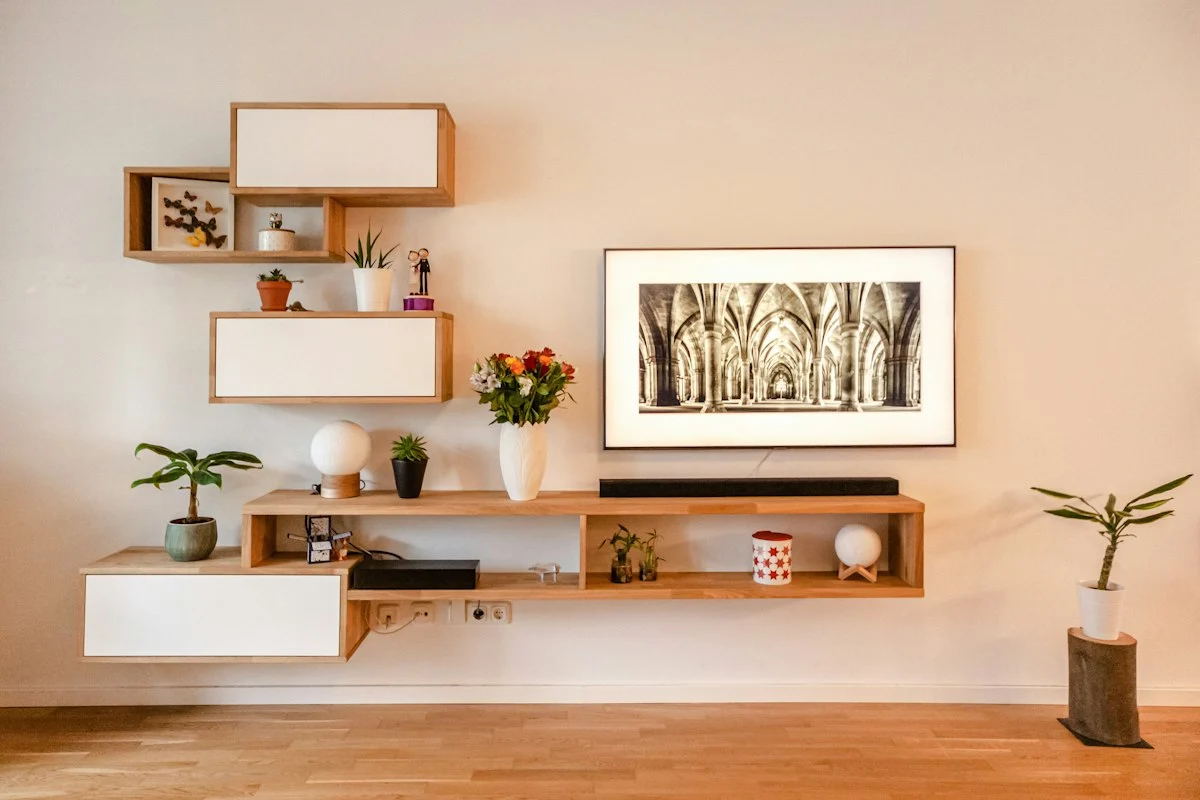
When floor area is restricted, your walls are your most valuable asset. Vertical storage solutions draw the eye upward, accentuating ceiling height while keeping your walkways completely unobstructed.
Ceiling-Height Modular Shelving
Rather than scattering multiple waist-high bookcases throughout the apartment, consolidate your storage onto a single wall with floor-to-ceiling modular shelving. By carrying shelves all the way to the crown molding, you eliminate awkward dead space on top of furniture and establish a striking architectural focal point.
Store your most frequently used items—such as daily books, speakers, and everyday mugs—between eye level and waist height. Place lighter, seasonal items like winter blankets or travel bags into woven lidded baskets on the highest tiers.
Over-Door and Behind-Door Hanging Systems
The space behind interior doors is one of the most underutilized assets in rental homes. Heavy-duty commercial over-door hanging racks turn the back of bedroom, bathroom, and pantry doors into vertical accessory pantries.
Use canvas or clear pocket organizers for bathroom toiletries, cleaning supplies, and cables. In the bedroom, sturdy steel over-door hooks easily accommodate structured hats, canvas totes, and outerwear that would otherwise occupy closet hangers. For full kitchen decluttering systems, check out our companion breakdown on the pantry organization system.
Multi-Functional Furniture That Earns Its Footprint
In a small apartment, single-purpose furniture is a luxury you cannot afford. Every major piece you bring through the doorway should perform at least two distinct functions.
| Furniture Type | Primary Daily Function | Secondary Hidden Storage Capacity | Best Placement |
|---|---|---|---|
| Storage Ottoman | Footrest & Extra Guest Seating | 40–80 Liters of Linens or Board Games | Living room center or bed foot |
| Lift-Top Coffee Table | Living Room Surface | Laptop Desk + Concealed Electronics Bin | Front of sofa |
| Hydraulic Platform Bed | Sleep & Rest Surface | 400+ Liters of Seasonal Wardrobe Storage | Master bedroom or studio niche |
| Drop-Leaf Dining Table | Console Table (Folded) | Seats 4–6 Diners for Entertaining | Kitchen perimeter wall |
| Entryway Bench with Drawers | Seating for Putting on Shoes | Shoe Shelves & Winter Accessory Bins | Main hallway |
The Power of Lift-Top Coffee Tables and Ottomans
A lift-top coffee table transforms your sofa into an ergonomic workstation while concealing remote controls, charging cables, notebooks, and gaming consoles beneath its spring-loaded surface. Similarly, an upholstered storage ottoman serves as a comfortable footrest, supplementary seating for dinner guests, and a discreet holding zone for throw blankets.
Hydraulic and Drawer Platform Beds
Your bed covers roughly 35 square feet of prime bedroom real estate. Leaving that volume empty or filled with messy dust ruffles is a missed opportunity. Hydraulic lift platform beds allow you to effortlessly elevate the entire mattress with one hand, revealing a cavernous, dust-free holding zone beneath.
Alternatively, wooden platform frames with rolling wooden under-bed drawers make rotating your seasonal wardrobe effortless.
Hidden Storage Hacks for Every Room
Creating a serene living environment requires keeping functional clutter out of sight. These proven hidden storage hacks tuck necessities into unexpected corners.
The Kitchen and Pantry Nook
Small apartment kitchens rarely have sufficient cabinet space. Maximize efficiency by installing adhesive acrylic racks inside cabinet doors to store cutting boards, foil boxes, and spices.
Add tension rods horizontally across deep drawers to keep frying pans and pot lids stored vertically like files in a filing cabinet. This simple trick quadruples your accessible cookware volume while preventing scratch damage.
The Entryway Drop Zone
Even the narrowest entrance corridor can support a high-efficiency drop zone. Mount a shallow floating ledge paired with brass wall hooks at eye level for keys, mail, and umbrellas. Place a slim shoe cabinet (such as an IKEA Trones or Hemnes cabinet, which measures only 7 inches deep) flush against the baseboard to keep footwear off the floor.
Maintaining a Clutter-Free Atmosphere
Implementing clever storage systems is only half the battle; maintaining them requires disciplined daily habits. When every item has an intuitive, designated home, cleaning up takes less than five minutes each evening.
Establish a “one in, one out” rule for clothing, cookware, and decorative accessories. When you bring home a new sweater or kitchen gadget, choose an existing item to donate. Explore our broader collection of guides in Home & Decor and learn more about tailored setups in our Small Space Living archive. For authoritative recommendations on indoor environmental quality and organizing standards, review architectural design principles from the American Institute of Architects and sustainability standards from the U.S. Green Building Council.
Strategic Lighting to Amplify Perceived Volume
Storage is not solely about physical shelving; visual perception plays an enormous role in how spacious or cramped a compact room feels. Poor lighting casts heavy shadows into room corners and beneath furniture, creating visual boundaries that make small apartments feel claustrophobic.
To make your storage systems look intentional rather than overwhelming:
- Install Wireless Puck Lights in Closets: Illuminating the dark interior recesses of shallow closets instantly makes clothing and shelves feel accessible rather than chaotic.
- Backlight Open Shelving: Placing low-voltage LED light strips along the back edge of floating shelves introduces soft ambient depth, making walls appear to recede backward.
- Use High-CRI Flush Fixtures: Replace dingy yellow lightbulbs with high-color-rendering (CRI 90+) warm white lamps (2700K to 3000K) to render neutral walls and wood surfaces crisply.
Seasonal Wardrobe Swapping Protocol
Never store all four seasons of clothing in prime closet real estate simultaneously. When spring arrives, spend forty-five minutes vacuum-sealing winter parkas, heavy wool knitwear, and thick scarves into airtight compression bags. Store these flat beneath your platform bed or on the highest shelf of your hallway closet, freeing up immediate breathing room on your daily hangers.
Frequently Asked Questions
How do you create more storage in a studio apartment without buying new furniture?
Utilize vertical wall space using floating shelves, add tension rods inside cupboards, mount over-door organizers, and slide shallow rolling storage bins beneath existing beds or sofas.
What is the most effective multi-functional furniture for small apartments?
Storage ottomans with interior bins, lift-top coffee tables that double as work desks, and platform beds with integrated slide-out drawers provide the highest storage volume per square foot.
How can you divide a studio apartment without losing natural light?
Use open-backed cube shelving units, sheer ceiling-mounted linen curtains, or slender slatted wooden screens that define distinct sleeping and living zones while letting ambient light filter across the room.
How do you stop visual clutter from overwhelming small rooms?
Adopt closed storage bins in uniform neutral colors, keep 20 percent of every shelf open as breathing room, and choose wall-mounted fixtures to maintain clear sightlines across your baseboards.
What is the single best vertical storage investment for compact rooms?
Adjustable wall-mounted shelving rail systems let you reconfigure bookcases, hanging rods, and drop-leaf desks over time without damaging multiple areas of your drywall.